BACFLY
BACFLY
Baculovirus and Therapy: Discover our platform in detail
BACFLY : Présentation
BACFLY (Baculovirus and Therapy) is a platform for the expression and production of recombinant proteins in the baculovirus/insect cell system. It offers innovative technology using this system for the construction of multi-recombinant baculoviruses and the production of recombinant proteins.
This technology also allows the expression of glycoproteins with different glycosylation variants (from “insect” glycosylation to “mammalian” type sialylated biantennary structures).
The “Baculovirus and Therapy” team has been part of LabEx MabImprove since its creation in 2011. BACFLY has been one of the platforms of the Biocampus Montpellier Research Support Unit since 2021. It has been labeled IBiSA since October 2019. Its premises are located in Saint-Christol-Lez-Alès (70 km north of Montpellier).


Our missions
BACFLY : History
“Insect viruses serving humans”
Why is the laboratory specialized in the production of recombinant proteins in insect cells?
Peak of silk production in the Cévennes
In the 1860s, silk production in the Cévennes was at its peak. Indeed, the quality of the silk manufactured in the Cévennes was recognized throughout the world and this activity quickly became crucial for the local economy. This industrial success led to the creation of increasingly large silkworm farms with the risk of facilitating the occurrence of devastating epidemics. This is what happened very quickly with the appearance in particular of a disease called “pébrine” (Pébrine: spots similar to peppercorns, pèbre: pepper in the Provençal language) endangering the entire sector of silk.
Intervention by Louis Pasteur
In 1865, Jean-Baptiste André Dumas, born in Alès, chemist, politician, then Minister of Agriculture and senator, contacted Louis Pasteur, one of his former students. Thus, Pasteur came to the Cévennes where he lived in Alès for four years. Although he did not identify the origin of the disease that destroyed silk farms, he developed and implemented a number of techniques to identify infected animals and therefore save silk farming in the Cévennes.
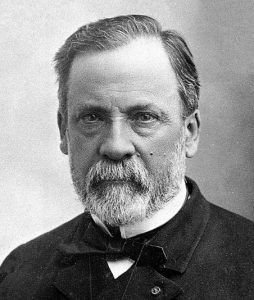
Louis pasteur
Creation of a research station in Alès
The INRA institute (National Institute of Agronomic Research) opened a research station in Alès then in Saint-Christol-Lez-Alès. This laboratory, associated with the CNRS, the University of Montpellier and ORSTOM (currently IRD), was quickly recognized throughout the world for the identification of pathogenic insects. It was the golden age of electron microscopy. This lab also pioneered the creation of the very first insect cell lines.
Appearance of molecular biology
With the arrival of molecular biology, research is shifting towards the study of viruses of agricultural interest, particularly aimed at controlling harmful insects affecting crops such as cotton, corn and potatoes. At the same time, some of these viruses are attracting interest for their potential applications in human health. It was at this time that Lois Miller, of the University of Georgia (Athens, United States), began work on the Baculovirus/insect cell system.
This virus, during its replication, produces two major proteins, polyhedrin and the P10 protein, which, although not essential for replication, are replaced by genes of interest using molecular biology tools.
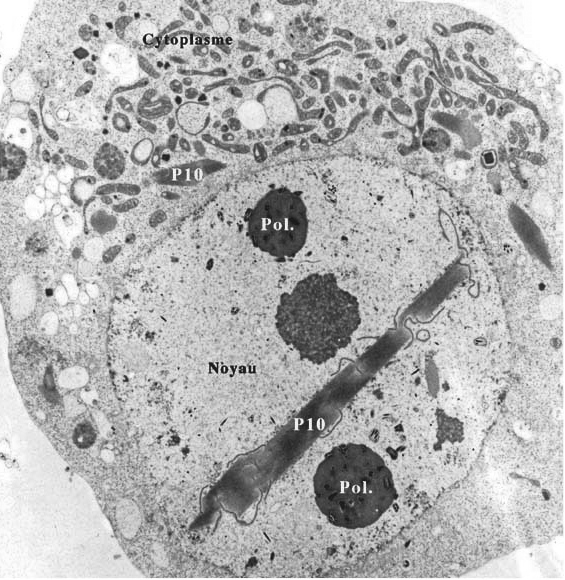
Insect cell infected with baculovirus
Development of advanced biotechnologies
In the 1990s, the laboratory developed innovative technologies to exploit baculovirus in the production of biopharmaceutical products and antibodies. These advances have promising applications in the treatment of complex diseases such as cancer, blood pathologies, inflammatory diseases and viral infections.
Advances in recombinant baculoviruses
Nowadays, the laboratory has developed modern technologies allowing the production of mono- or multi-recombinant baculoviruses. These innovations offer faster and more efficient production of recombinant proteins in insect cells, strengthening the potential of this biotechnology platform to meet various industrial and medical needs.
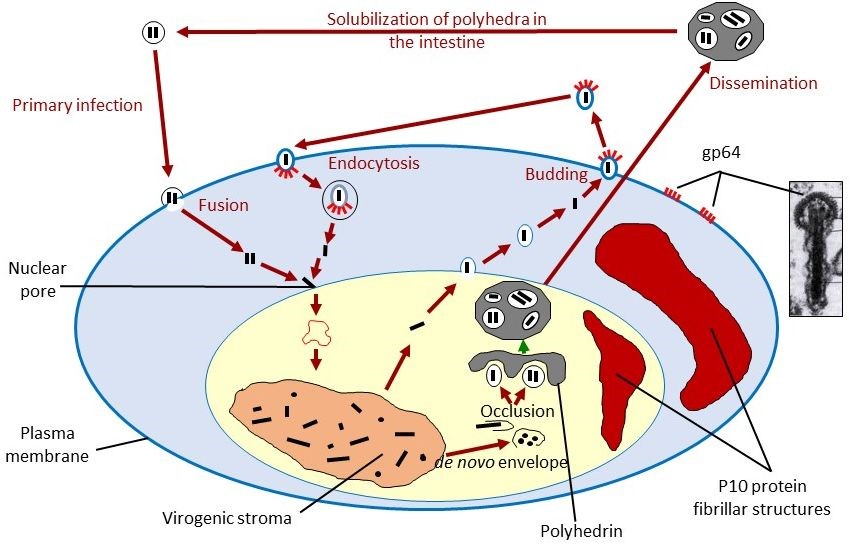
Baculovirus infectious cycle
BACFLY : Services
The BACFLY platform specializes in the expression and purification of complex proteins using the Baculovirus/insect cell system. We offer solutions for a variety of projects, including the production of mono- and bi-specific antibodies, modified glycoproteins and virus-like particles (VLPs) for vaccines. With its innovative patents and recognized expertise, our team supports users in their projects, from design to production.
- simple proteins but difficult to express (GPCR, ion channels, etc.),
- complex proteins & protein complexes with coexpression of 1 to 6 proteins (mono and bi-specific antibodies, Virus Like Particles, multi-enzyme complexes, etc.),
- glycoproteins with different glycosylation variants (insect glycosylation with mammalian sialylated biantennary structures),
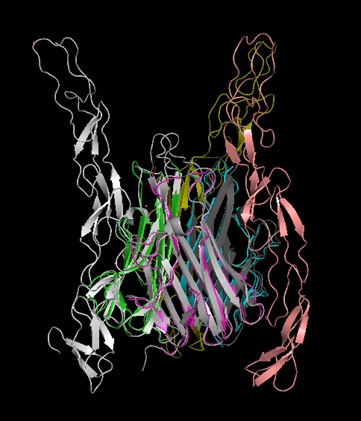
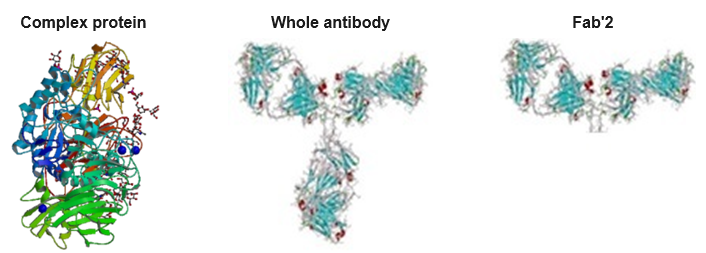
Protéines complexes, anticorps et autres formats dérivés. Applications : cancer, infectiologie, …
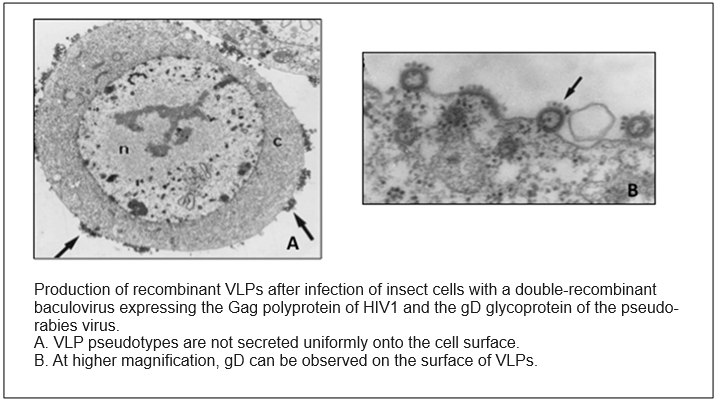
Production of VLP (Virus-Like Particle) which are empty viral capsids for the preparation of vaccines.
The Baculovirus/insect cell system is extremely efficient for the rapid generation of vaccine doses (pandemic).
Recombinant proteins produced in our expression system:
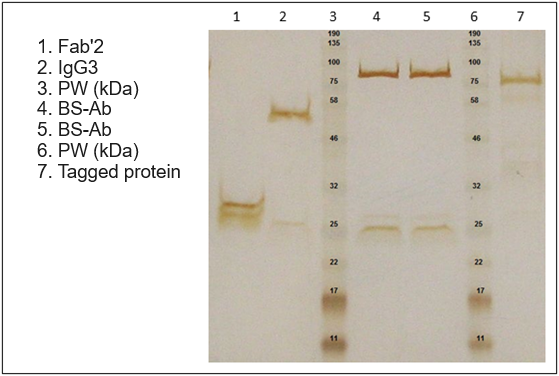
SDS-PAGE 10% with silver coloring
(Fab’2 Antibody Fragment, IgG Immunoglobulin, PW Protein Weight in kiloDalton, BS-ab Bispecific Antibodies)
The BacFly platform offers a baculovirus amplification service previously generated by the user. This process consists of producing viral stocks at high concentration, necessary for large-scale experiments or to optimize the expression of recombinant proteins.
During project implementation meetings, the team’s expertise makes it possible to advise users on protein formats and different production methods. The team can also welcome and introduce users to the expression of recombinant proteins in the baculovirus/insect cell system.
BACFLY : Team
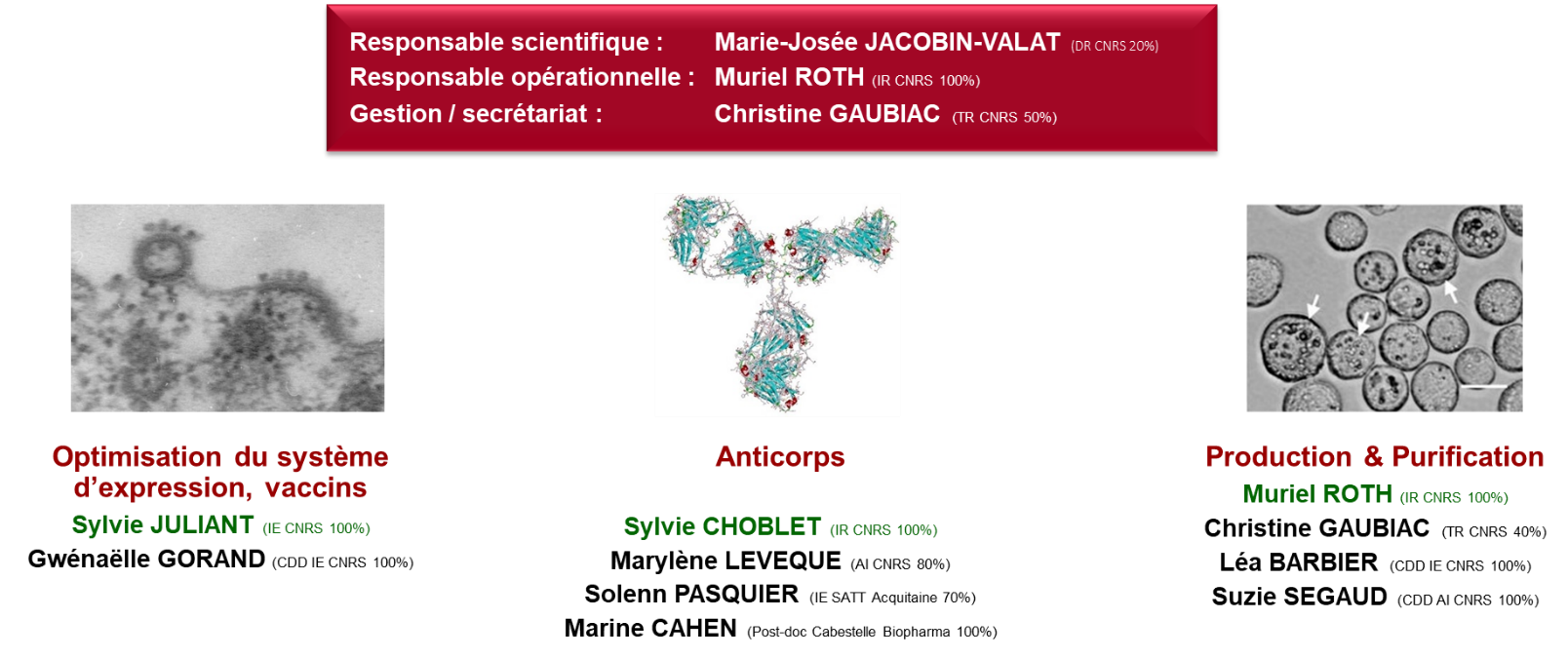
With its experience and know-how, our team is at your service to best meet your needs and your scientific projects.
Expertise : Immunology, immunotherapy, cell therapy.
Amine Kamen, Teacher, McGill University, Canada.
Expertise : Production of recombinant proteins in insect cells, scale-up.
Francisco Véas, Research Director IRD, Montpellier.
Expertise : Vaccines, HIV, Ebola, Zika virus.
Gisèle Clofent-Sanchez, CNRS Research Director, University of Bordeaux, member of commission 28 of the National Scientific Research Committee.
Expertise : Antibodies, phage display library, atherosclerosis imaging.
Alain Morère, Professor, University of Montpellier.
Expertise : Glycochemistry, lysosomal diseases.
Telephone contact details :
Muriel ROTH – 04 66 91 21 71
Marie-Josée JACOBIN-VALAT – 05 57 57 10 22
For all other team members : 04 66 91 21 70
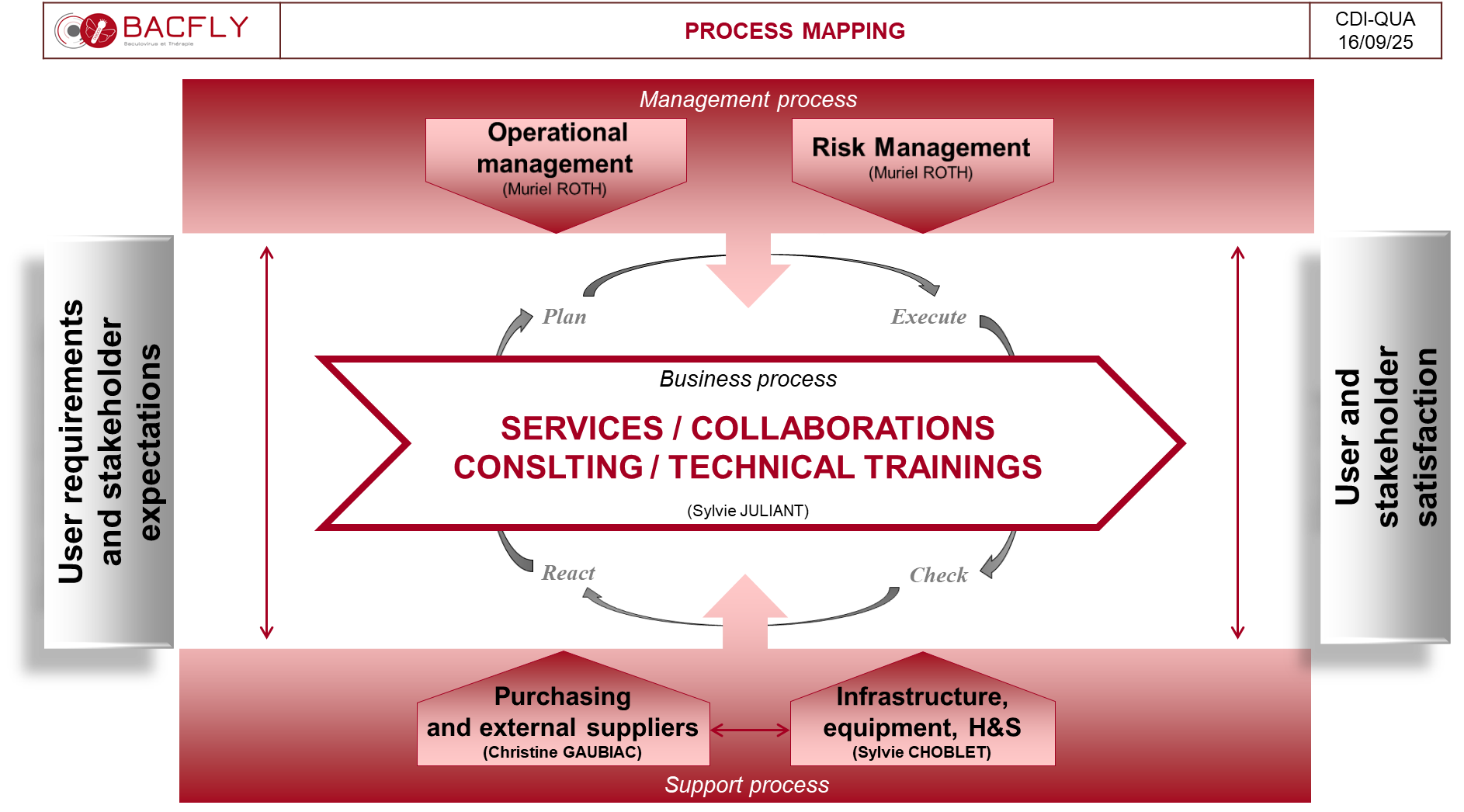
BACFLY : Quality Management

The BACFLY platform began its quality management initiative in March 2021 with the goal of obtaining ISO 9001:2015 and NFX 50-900 certification by April 2023. More than 300 quality documents have already been written and updated as part of the quality management system:
• Quality Documents (Scientific and Quality Policy, identity cards and procedures for the three processes: management, support, and business processes, etc.)
• Operating Procedures (Task descriptions including risk prevention in the various application areas of the platform)
• Record Sheets (For traceability of tasks)
As part of a European EDCTP project, BACFLY has implemented a risk management process.
Quality Management Representative (QMR) : Muriel Roth
BACFLY : Organization chart
Direction de la plateforme BACFLY
- Marie-Josée JACOBIN-VALAT (IR, CNRS, 20%)
Responsable Scientifique :
- Muriel ROTH (IR, CNRS, 20%)
Responsable opérationnel :
- Muriel ROTH (IR, CNRS, 15%)
Responsable management qualité :
Comité de Direction
- Sylvie CHOBLET THERY
- Christine GAUBIAC
- Marie-Josée JACOBIN-VALAT
- Sylvie JULIANT
- Muriel ROTH
Comité d'orientation scientifique et technique
- Gisèle CLOFENT-SANCHEZ ( CRMSB, Bordeaux )
- Josée GOLAY ( Hôpital de Bergame, Bergame )
- Amine KAMEN ( Université McGill, Montréal )
Experts externes :
- Alain MORERE ( IBMM, Montpellier )
- Francisco VEAS ( TransVIHMI, Montpellier )
Experts locaux :
BACFLY - Baculovirus et Thérapie
Optimisation du système d'expression
- Sylvie JULIANT (IE, CNRS, 100%)
Responsable :
- Victor FUSENIG (CDD IE, CNRS, 100%)
- Victor FUSENIG (CDD IE, CNRS, 100%)
- Gwenaëlle GORAND (CDD IE, CNRS, 100%)
Personnel plateau CDD :
Anticorps
- Sylvie CHOBLET THERY (IR, CNRS, 95%)
Responsable :
- Marylène LEVEQUE (AI, CNRS, 80%)
Personnel plateau permanent :
- Abdelmoujoud FARIS (CDD IE, UM, 100%)
- Solenn PASQUIER (CDD IE, CNRS, 100%)
Personnel plateau CDD :
Production & Purification
- Muriel ROTH (IR, CNRS, 65%)
Responsable :
- Léa BARBIER (CDD IE, CNRS, 100%)
- Suzie SEGAUD (CDD AI, CNRS, 100%)
Personnel plateau CDD :
BACFLY : Premises
The BACFLY platform has premises of over 800 m² provided to the CNRS by the Alès Agglomération community of municipalities. These premises are shared with a team from the CNRS UMR Espace unit and the company CamInnov.


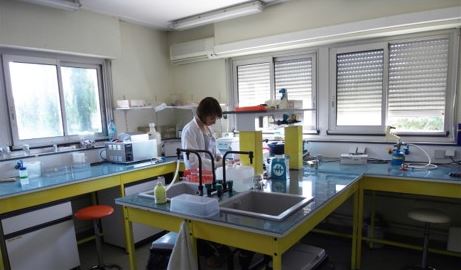
The premises include several laboratories classified as L1 for work in bacteriology, molecular biology, cell biology, virology, biochemistry, production (including a 40 m² cleanroom), and recombinant protein purification.